


By Jared Bauman, CEO of 201 Creative
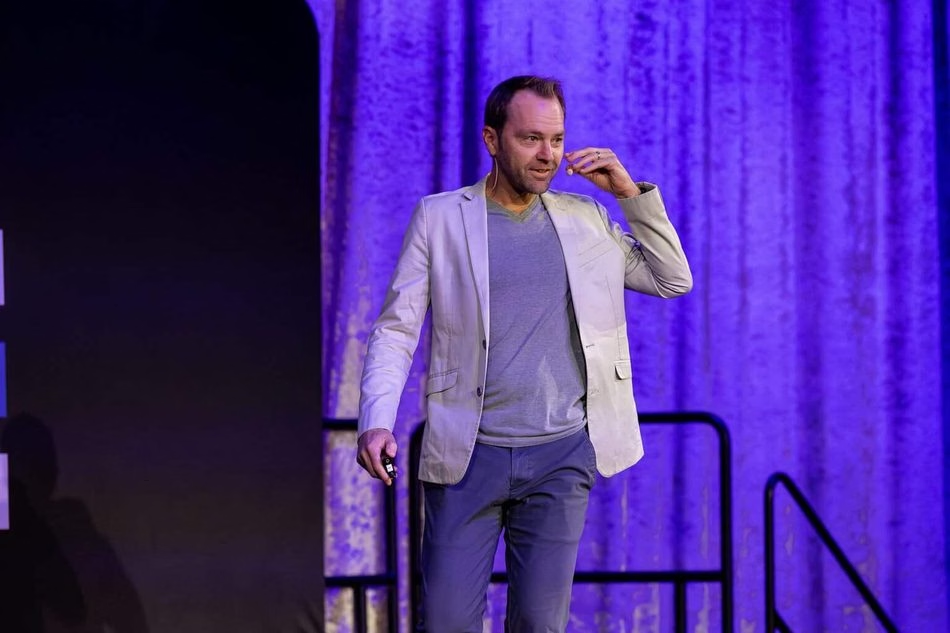
I spoke on SEO and GEO at TBEX North America in Richmond this past June 2026. We covered a lot of ground quickly, so I wanted to take some time to outline more of what we talked about, and why it’s vital for travel creators to pay attention, adapt, and keep pushing forward.
The Ground Actually Shifted
First off, let’s look at the facts as they relate to the last few years in Search:
- 58.5% of U.S. Google searches now end with zero clicks (SparkToro / Datos, 2024)
- -34.5% click-through rate for the #1 ranking page on informational queries once an AI Overview shows up (Ahrefs, 300,000-keyword analysis, April 2025)
- Travel queries trigger AI Overviews more than almost any other category
- 78% of 671 travel publishers analyzed lost organic traffic between the first Helpful Content Update (Aug 2022) and the March 2024 core update (Digitaloft, via Near Media)
If you run a travel blog and it’s felt like the ground moved under you the last two years, it did.
Now that we have the data out of the way, how do travel bloggers adapt when the ground is shifting (and will continue to) in how online search and discovery work?
SEO Isn’t Dead, But Pure SEO Isn’t Enough Anymore
Ranking #1 pays out less than it used to, especially when an AI Overview is present. A chunk of searchers never click past the AI Overview, and that chunk is only growing (reference the zero click metric I cited above). Traditional SEO by itself no longer delivers what it did five years ago.
That doesn’t mean it’s worthless. Four things drive the remaining organic visibility, and they also double as the foundation GEO builds on. All four need to be working, not just one or two:
- Technical foundation: crawlability, site speed, mobile, schema
- Topical authority: deep coverage of a focused topic beats shallow coverage of everything
- Backlinks: referring domains remain a primary driver of organic visibility
- EEAT: Experience, Expertise, Authoritativeness, Trustworthiness
Google’s Helpful Content System is the real reason most of that 78% lost traffic. The bar: useful, original, satisfying, written by someone who clearly has experience.
| Lost traffic | Survived |
| Thin destination guides | Deep personal experience |
| Generic listicles | Original media |
| AI-written archives | Real opinions and takes |
| Affiliate posts with no real perspective | Consistent topic focus |
For most travel blogs, all four pillars often need work, and yet content is where the biggest opportunity sits. That’s not true for every content category.
It’s true for travel specifically because of what travel creators uniquely have: you were actually there. You have the real photos, the real prices, the mistakes, the specifics no AI model can generate. Most industries can’t manufacture that advantage. Travel creators already have it and most aren’t using it to the extent necessary.
Experience Is the Moat
Of EEAT’s four letters, Experience is the one AI genuinely cannot replicate. It hasn’t walked your route, tasted the dish, or gotten lost on the wrong bridge… you have.
Build every page around it:
- Photos you took, not stock
- Real visit dates (and updates) and real prices paid
- What you’d skip next time
- Opinions, mistakes, the messy human details no model can generate
AI can help you draft faster, but it can’t have had the experience it’s writing about. If you’re using it to skip the parts above, it works against you. If you’re using it to get your own real details onto the page faster, it works for you.
One story from the Niche Pursuits Podcast that I host helps makes this concrete: Melissa Byron, A Solo Woman Traveling. She peaked at 46,000 monthly sessions in 2023, mostly ad/affiliate dependent, then dropped to 15,000 after the Helpful Content Update.
She nearly quit. But instead, she rewrote her articles with more personality, added group tours, and leaned into community. Of late, she’s at 100,000 sessions/month, with tours, not ads, as her primary revenue.
“I was so focused on it being SEO perfect, lacking a little bit of my soul in it. I was seeing returns from that and traffic was rising.”
The same logic applies to scope. Generic “world traveler” sites are getting commoditized. But, hyper-niche sites (example: one region, one style, one demographic) are still able to carve out a space in Search rankings.
More and more, you need to pick a lane, and then cover it more completely than anyone else, and then expand. It’s not that the listicle isn’t dead but that the generic listicle without your photos, your dates, and your point of view is.
GEO: A Different Game, Same Foundation
SEO gets you ranked in Google’s blue links. GEO, Generative Engine Optimization, gets you cited inside ChatGPT, Perplexity, AI Overviews, and Gemini.
They overlap heavily, and most of the work that improves one also improves the other, but they’re measured differently and worth understanding as separate disciplines.
An SE Ranking analysis of 129,000 domains and 216,524 pages found:
| Factor | Lower group | Higher group |
| Referring domains | 1.6 citations (under 2.5K refdomains) | 8.4 citations (350K+ refdomains) |
| Content depth | 3.2 citations (under 800 words) | 5.1 citations (2,900+ words) |
| Expert quotes | 2.4 citations (without) | 4.1 citations (with) |
| Freshness | 3.6 citations (outdated) | 6.0 citations (recently updated) |
| Page speed | N/A | Fast pages cited 3x more |
| Keyword match in URL | 6.4 citations (low match) | 2.7 citations (high match, stuffing hurts) |
What doesn’t move the needle
Schema on its own. There’s lots of other things that don’t move the needle much, to be fair, but let’s focus on this one to make a point.
Two separate studies tracking thousands of pages that added schema reached different conclusions on citation lift. (Study 1) (Study 2)
I love adding schema (a form of structured data) to pages to help better define the entities associated. But, schema on its own is not something that will move the needle for you.
And that’s why I love this example, because it underscores the overall approach you need to take nowadays. It isn’t about doing one or two things, it’s about a comprehensive, collective approach to SEO and GEO to focus on being a unique and authoritative resource that can be trusted.
So, add schema as a baseline requirement, but don’t expect it to move citations by itself.
Brand mentions matter more than ever
Domains with heavy Reddit mention volume average 7.0 AI citations, compared with 1.8 for domains with minimal Reddit activity. Domains with heavy Quora presence average 7.0 citations, compared with 1.7 for minimal presence.
Both gaps run close to 4x, per the same SE Ranking analysis cited above. The study measures this as a correlation with overall domain authority, not an isolated cause. The numbers still support the same action: show up where your audience already talks.
Getting there comes down to three things:
- Claim what you are. State your positioning clearly and consistently: who you are, what you cover, why you’re credible.
- Frame it to your advantage. Control how that positioning gets described, on your own pages and in how you present yourself to journalists, podcast hosts, and interviewers.
- Link out to the proof. Every claim about your experience or expertise should point to something that backs it up: past work, press mentions, an author archive.
One fix I see on travel creator About pages is the opening. Most start with an origin story, how the blog began, why travel matters to them, etc.
Instead, lead with what you are today instead: who you are, what you cover, why someone should trust you. The story can come after. AI systems and readers both need the “what you are” answer immediately, not three paragraphs in.
What to Actually Do
- Prune before you build. It’s not uncommon for 50–90% of travel blog archives to drive zero traffic and zero value. A bloated archive drags down how often Google crawls your good content. Delete or consolidate the bottom of your archive first.
- Fix what’s already working. Find the 5-20 articles (or more, if you’re lucky) driving most of your traffic or affiliate revenue. Update the content, adding as many personal references and anecdotes as possible. New prices, new photos, a visible “last updated” date. Add a TL;DR at top, an FAQ block at bottom, original photos, a visible last-updated date, and relevant schema.
- Build the author entity. One strong About page stating who you are, where you’ve been, and why anyone should trust you. Author bio linked from every article, not just the homepage.
- Lean into experience signals everywhere. Replace stock photos, add “I visited in [month, year]” timestamps, add “what I’d skip” sections.
- Earn real mentions. Bylines on outlets you already read, travel podcast interviews, HARO-style journalist queries, TBEX speaking slots, etc. Each one compounds.
Skip: llms.txt, spammy schema (12 types that don’t apply to your content), AI SEO tool subscriptions before the basics are fixed, and synthetic citation networks. None of it moves the number that matters.
The Real Shift
Some of the traffic that built travel blogging over the last decade isn’t coming back. Where the energy goes instead:
- An email list you own, not a channel you’re renting
- Newsletter monetization, sponsorships, a paid tier
- Direct destination and brand partnerships
- Product income: guides, courses, communities
- Affiliate diversification
The brand is the asset. The traffic was always borrowed. That can be a tough pill to swallow, but it’s been this way since the beginning of the internet.
The good news is that Google and LLMs love brands. They love to cite them and they love to link to them. So, big picture, all roads lead to brand.
If you want to see how AI actually reads your site right now, my agency 201 Creative built a free five-pillar GEO Snapshot Audit, the same tool I referenced on stage in Richmond.
To close: AI can write a paragraph (or ten) about a destination. It cannot have been there. Build the content that proves you were.




Add your first comment to this post