


You’re in the business of packaging experiences. That’s essentially what a travel creator does.
You write blogs to help people plan a trip or build packing lists. A video tour gives your fans a sense of the destination. A podcast lets them hear the story behind a place.
A book pulls all of that content together.
For travel bloggers, photographers, podcasters, YouTubers, and newsletter creators, a book doesn’t have to start from scratch. There’s no blank page to stare at because you’ve already created a ton of content to work with. The destination guides, itineraries, interviews, photo essays, gear lists, food recommendations, and local tips you have been publishing for years can become something focused, useful, and—most importantly—profitable.
A Book Turns Your Best Content Into a Profitable Product
The longer you spend creating content, the more scattered that content tends to be. This is true for any niche. You end up with blogs, social posts, videos, newsletters, and podcasts across a variety of platforms.
A book takes that scattered content and gives it structure.
You could turn a destination series into a weekend guide. A collection of food posts into a regional dining book. A set of interviews for a local voices project. A photo archive becomes a visual keepsake. A long-term travel blog into a planning workbook.
I could go on. The possibilities are limited only to what kinds of content you already have in place. All you’re doing is finding the right format for your content and curating it into a single book your followers can take with them on their own adventures.
Remember, your readers are not just buying information. If they needed to know the most popular tourist spots or routes between two cities, they’d consult Google. They are buying your judgment and taste.
Books Fit Naturally Into a Travel Creator Business
Books are one of the best ways to monetize a creator’s business. Courses (or coaching, depending on your content and audience) and subscriptions are the other popular options. All three of these work well together, building a sustainable source of income.
Your book will play two important roles in your business:
- Creating a source of revenue
- Building your authority
Books are a terrific way to add revenue to your business, though you shouldn’t expect them to fully sustain you. But the brand authority a book adds can be a huge boost.
One example of leaning on your increased authority comes in earning sponsorship deals. The credibility you build with a book will show potential sponsors you’re serious about your work and that you’re an expert in your space.
Print-On-Demand Makes Publishing Much Easier
For years, the hardest part of publishing a travel book was not the idea. It was the inventory.
Traditional printing usually meant an offset-printed order of thousands of books. Unless you’re sure you’ll sell most of them, you’d likely be losing a substantial amount of money just to get your books printed. Not to mention it would lock you into that content. What if a restaurant from your food guide to Cleveland closes? If you’ve already printed 1,000 copies, it’s not easy to make an update.
Print-on-demand changes the model.
Instead of committing to a large print run, you simply publish your book with a
print-on-demand provider and have copies printed as orders come in. That makes it easier to test a niche idea, update files when details change, and avoid the risk associated with holding inventory.
Examples of Travel Creator Books
Travel content tends to take a variety of forms, leading to a wide variety of book options too. Smaller, niche projects are often easier to finish and market, so you should think carefully about what kind of content will best excite and serve your audience. A few formats I’ve seen recently include:
- A 72-hour guide to one city
- A road trip planner for a specific route
- A family travel workbook
- A photography guide to a region
- A food-focused neighborhood guide
- A travel journal with prompts
- A calendar featuring popular locales
The more specific the book, the easier it is to explain why someone should buy it. Here are a few of my favorite examples:
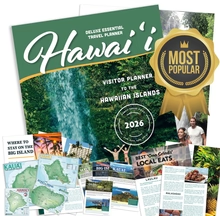
2026 Deluxe Essential Hawaii Travel Planner & Visitor Guide
This annual guide to the essential travel spots in Hawaii delivers timely and up-to-date travel plans.
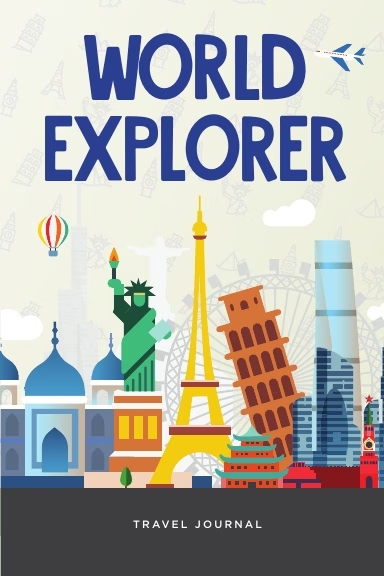
World Explorer Travel Journal for Kids
Taking your kids on a trip can be a challenge. But with this travel journal, they’ll have plenty of ways to engage with the family trip.
Northern Landscapes Calendar 2026
Capturing the beauty of nature, this 2026 calendar highlights how travel photography can create profitable content for your business.

Start with Your Audience, Not the Format
The easiest way to make a book too broad is to say to yourself, “I want to publish a travel book.”
That’s too big. Instead, start by answering these questions:
- Who is your primary or intended audience?
- What kinds of trips are they planning?
- What decision are they trying to make?
- What has your audience been asking for?
- What do they trust you to explain better than anyone else?
A good travel book should have a clear promise. Help someone plan a better first visit. Find the best local food. Take better photos. Travel with kids. Spend less. See more in less time.
Your existing blogs, videos, and other content should inform the direction you take. If you’ve focused on finding the best food in various regions, that’s probably the best direction for your book, too. You’ve already built trust in that area; the book is simply an extension of that trust and knowledge.
For travel creators like you, that is a powerful opportunity to give your audience something valuable, long-lasting, and immediately useful.
Ready to turn your travel content into a book? Learn how to create and sell custom travel books with Lulu.




Add your first comment to this post